Encounter
Students review the chart, interview and examine the patient, order a workup, and document a plan in an Office Visit or EMR Message.
- History
- Exam
- Orders
- SOAP note
Adapt ready-made cases, schedule the term, review student work, and assign targeted practice where the evidence shows a gap.
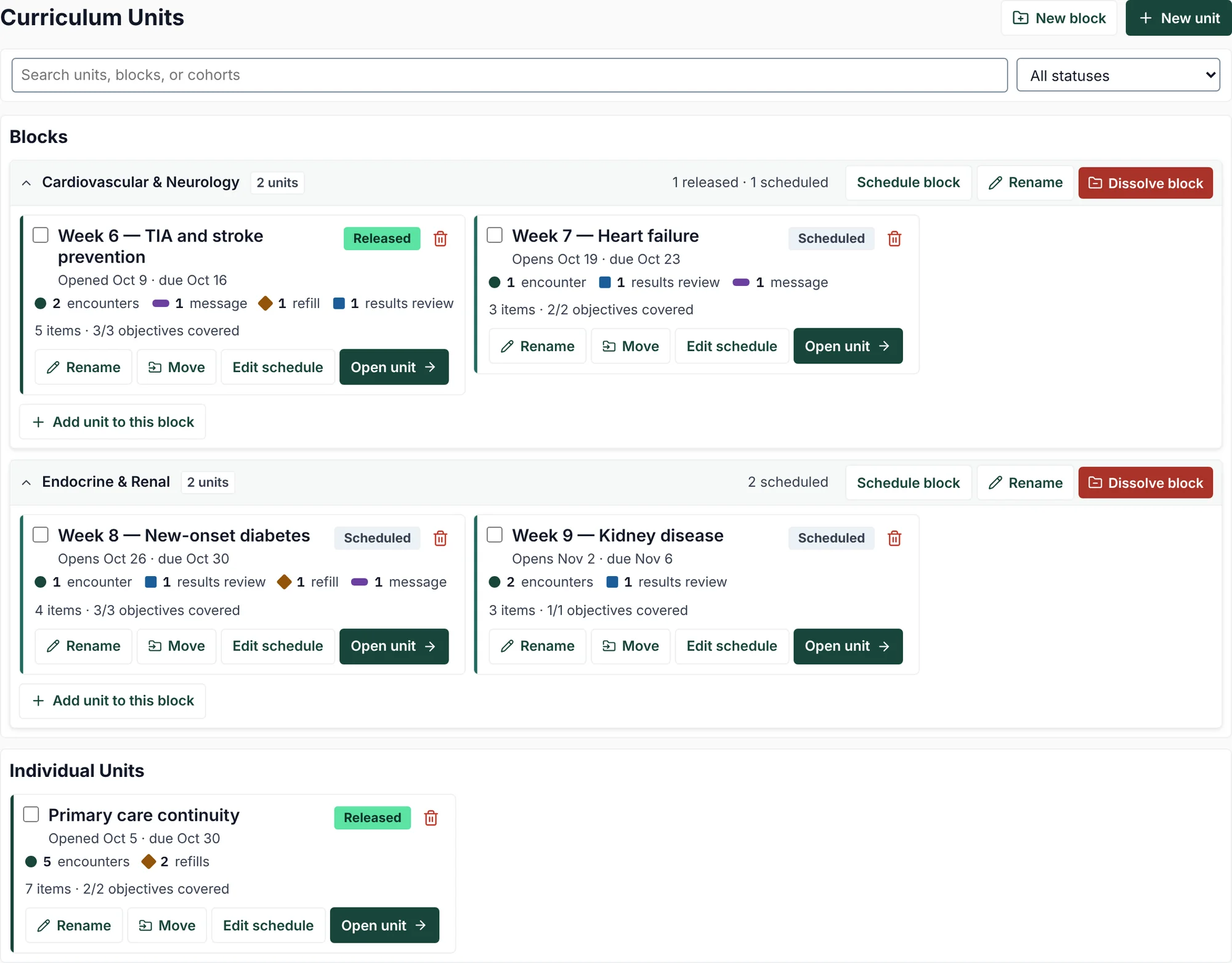
Mix encounters, medication refills, results reviews, and staff messages in any unit.
Students review the chart, interview and examine the patient, order a workup, and document a plan in an Office Visit or EMR Message.
Students weigh the indication, interactions, and monitoring for a refill request, decide whether to refill, and explain the decision to the patient.
Students interpret a returned result in context and decide what happens next, from routine follow-up to urgent action.
Students answer a question from a nurse, pharmacist, or colleague with a concise, professional reply.
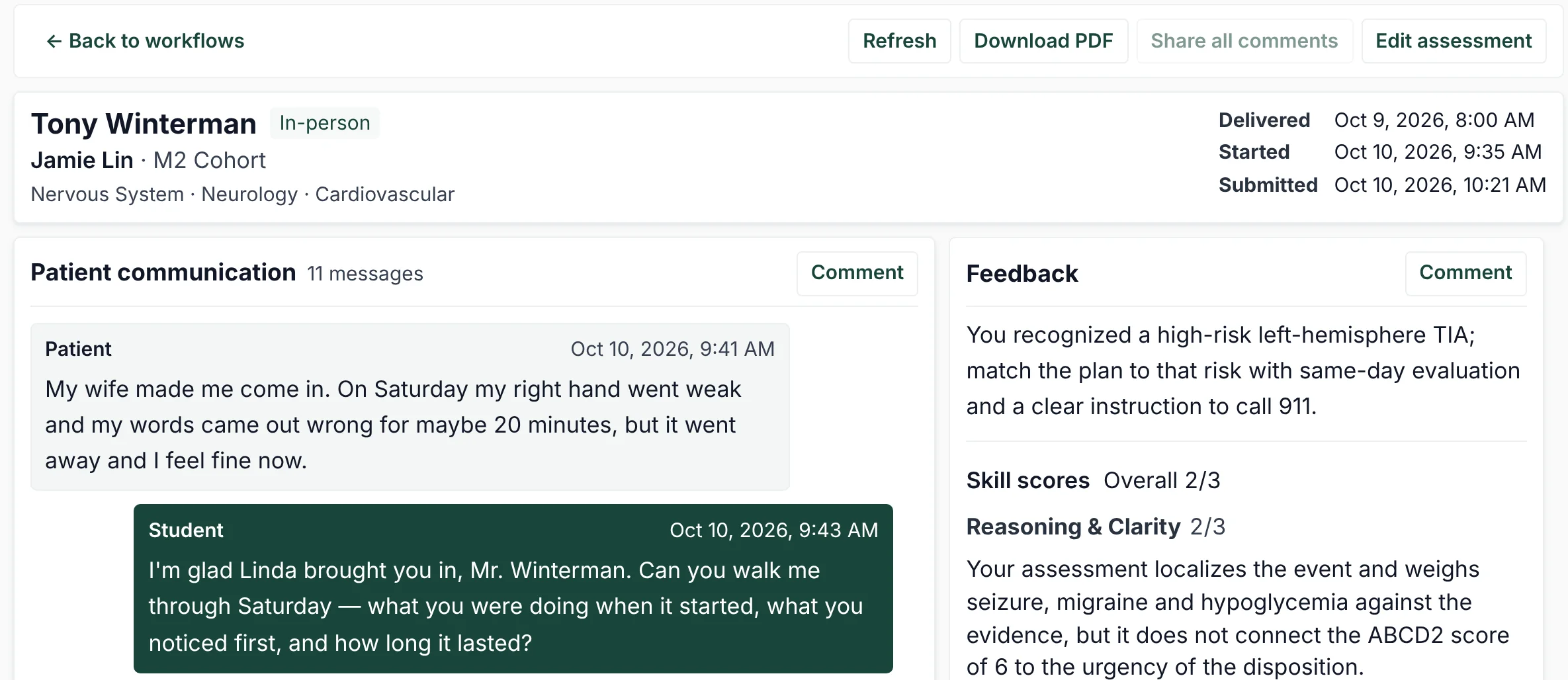
Each medical submission is scored from 0 to 3 on three skills, with a reason for every score, and SOAP notes get section scores. Nursing shifts use four nursing skills. Instructors can correct an assessment from the student’s record.
Accurate, case-specific knowledge applied to diagnosis and management.
Clear reasoning from the evidence gathered to each decision, including every order’s indication.
Plain-language, empathetic communication with patients and the care team.
Complete each step in the Faculty Dashboard.
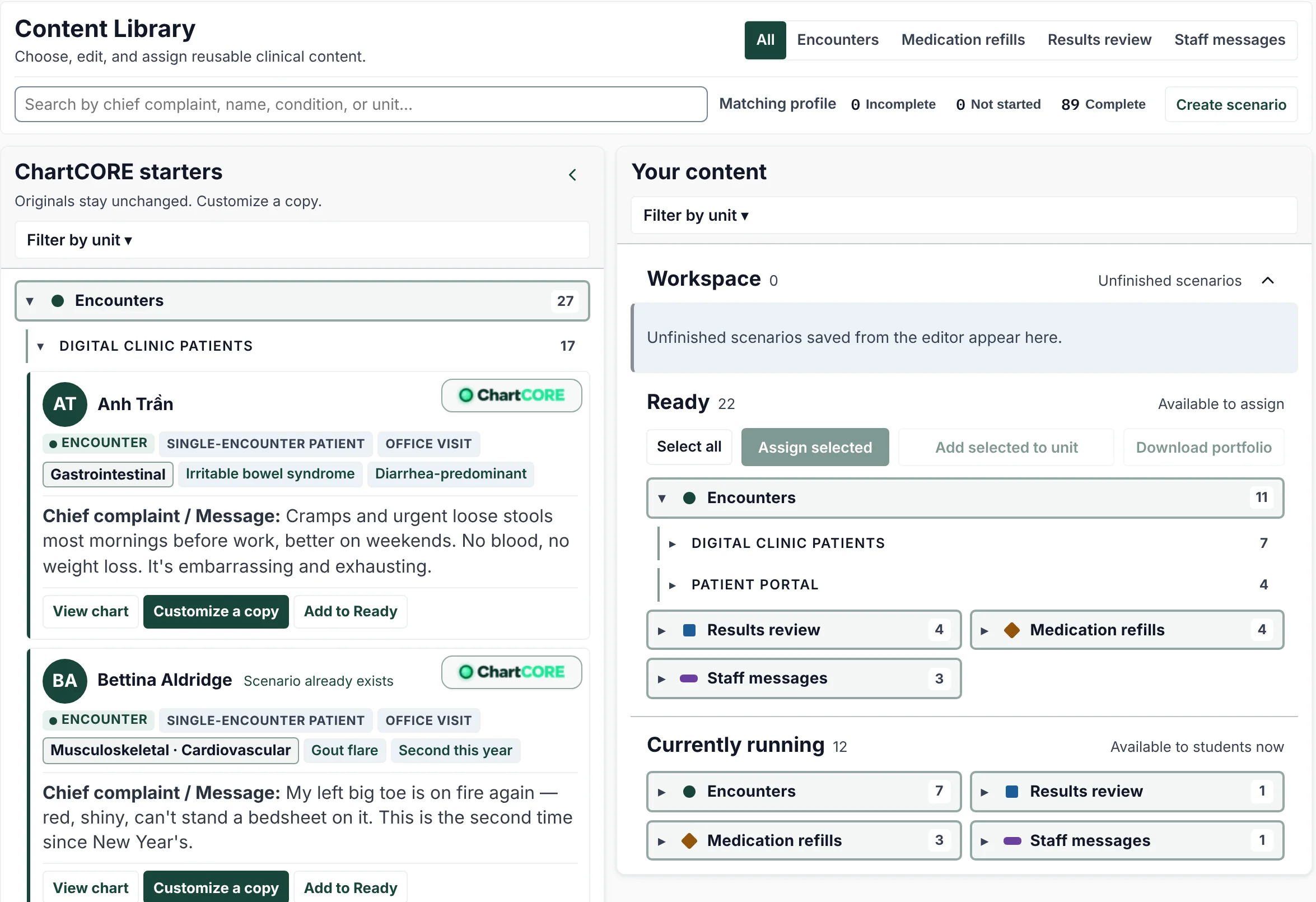
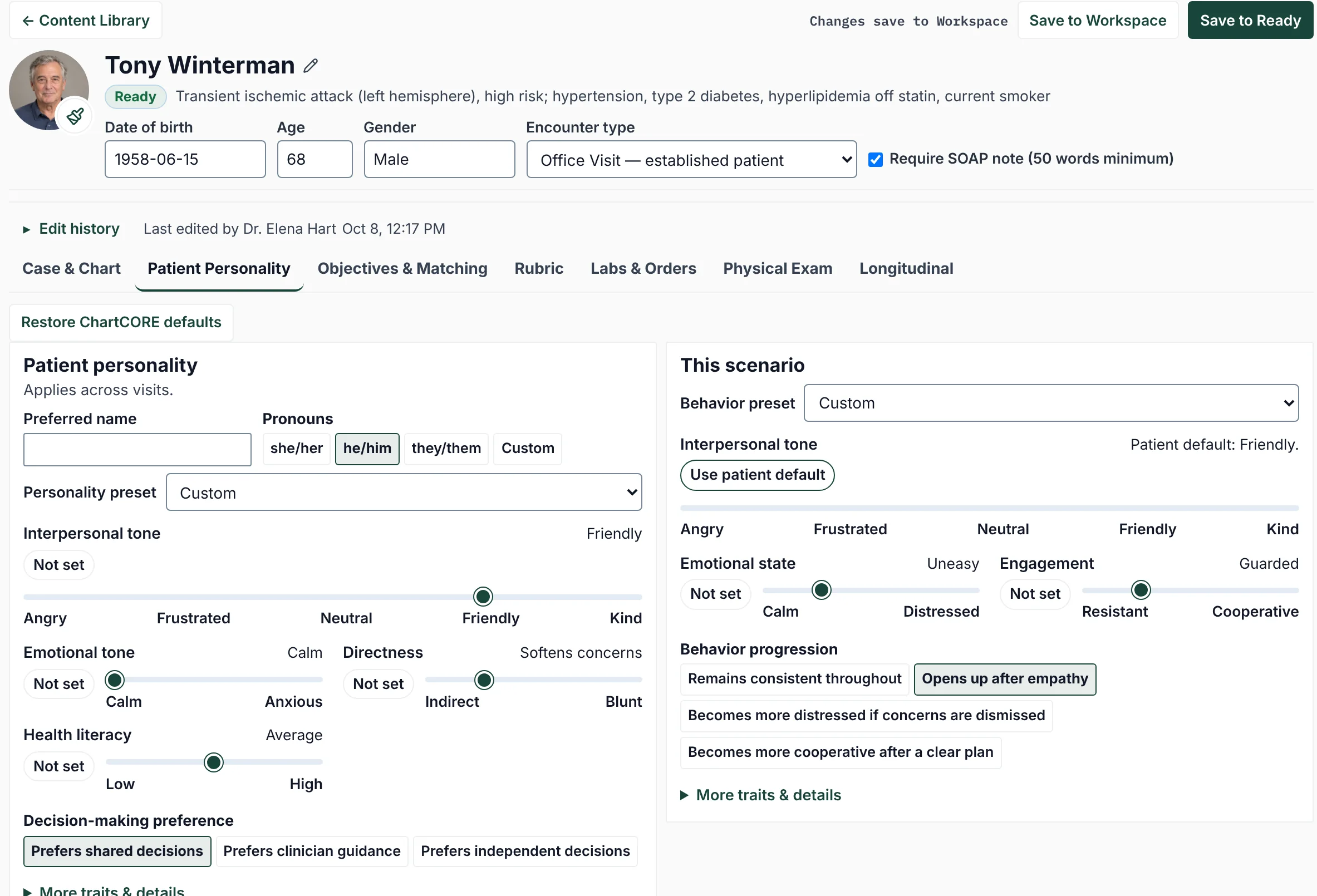
Start from ChartCORE’s ready-made cases. Customize a copy, from the chart and exam findings to the patient’s personality. The original stays unchanged.
A unit holds a week or topic of work and its learning objectives. Blocks keep related units together so you can schedule them as one.
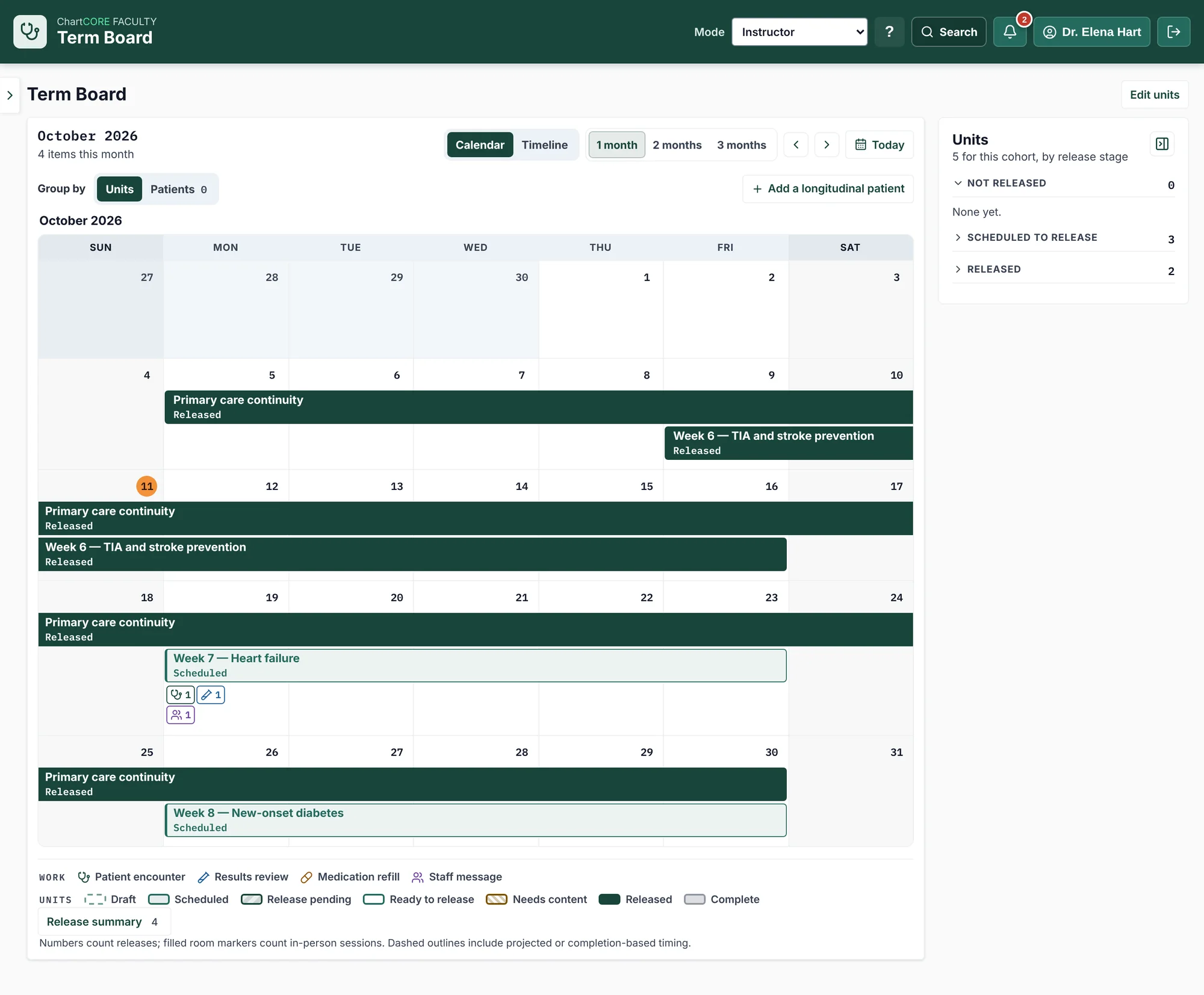
See every unit on one calendar. Release work now or on a date, or chain a unit to open a set number of days after another.
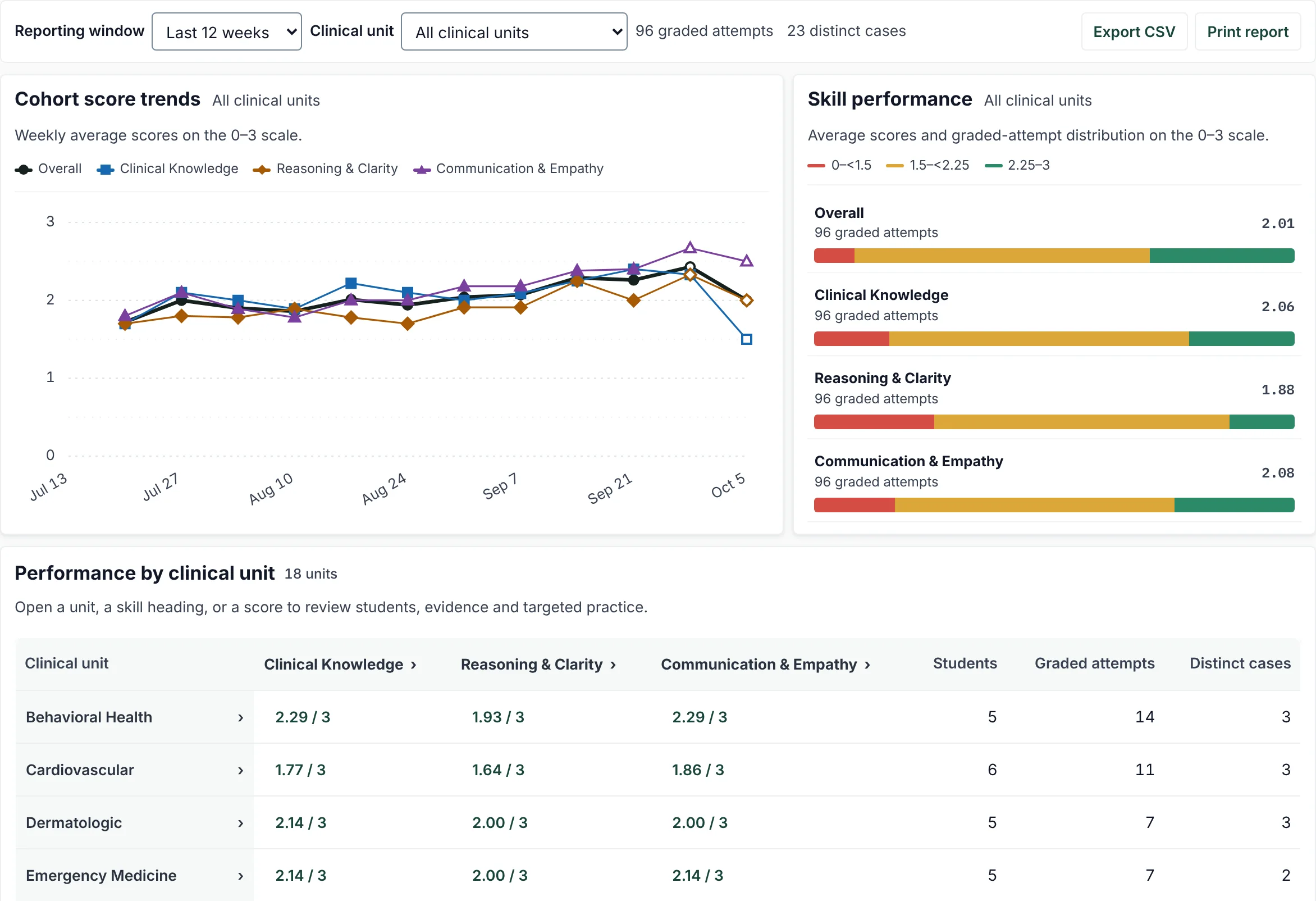
Analytics show observed scores, trends, and distinct-case counts for each skill and clinical unit, for the whole cohort or one student.
Find the skill and clinical unit with the lowest scores, then open them to see which students need support.
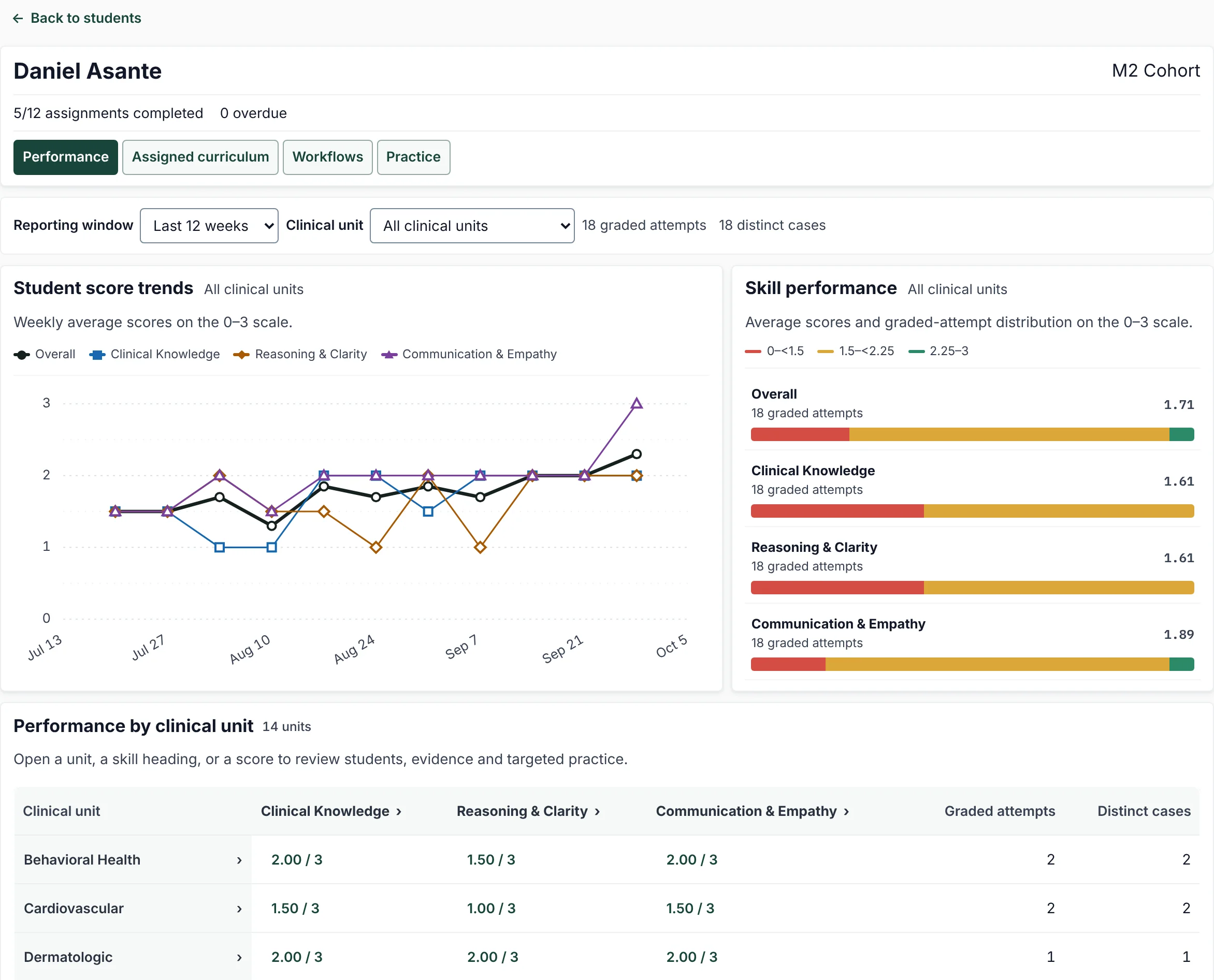
Follow one student’s scores over time and see which clinical units need attention.
Student Workflows opens any submission: the patient conversation, orders and results, exam findings, SOAP note, and feedback.
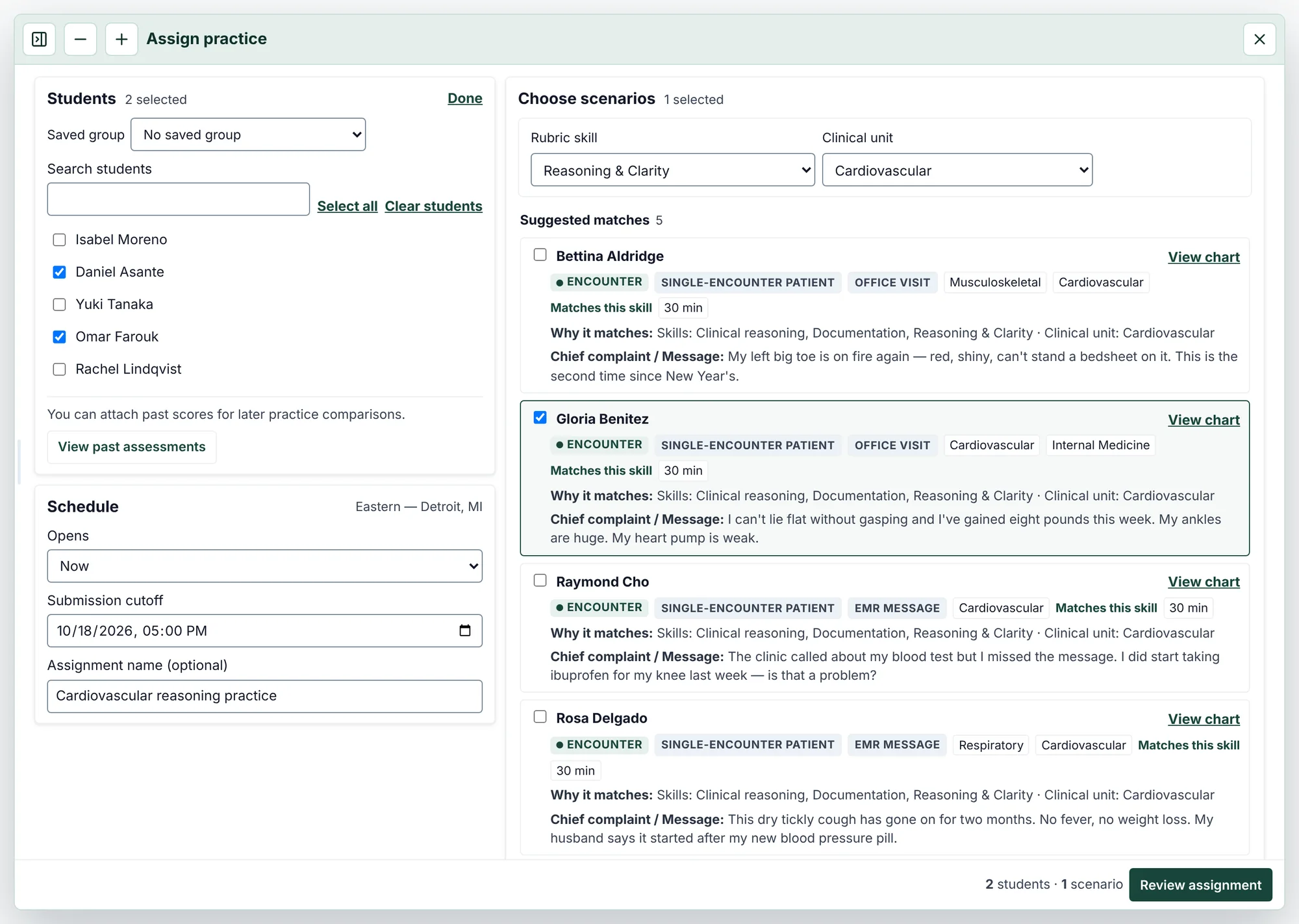
Choose the students and the skill to strengthen. ChartCORE suggests matching scenarios and explains why each one fits.
Organize cohorts and add your school’s students in bulk.
Upload your school’s rubric as a PDF, review the criteria drafted from it, and choose which cohorts it grades.
See class questions together and spot recurring confusion early.
Review student reports alongside the case or scenario they concern.
Start with cases across the major organ systems. Assign them as they are or adapt them for your course.
Every medical encounter is scored on the same three skills, and comparisons only combine work graded with compatible criteria.
Keep each submission’s conversation, orders, note, and assessment, and export cohort results for curriculum review.